
Case studies
How We Work
Four projects, described the way an engineer would want to read them: what was actually wrong, what we measured, what we designed, and what we put in writing. Clients anonymized — see the note at the bottom.
Innovate · Premium ice producer scaling a craft product to industrial volume
1. De-Risking a $2M Production System With Structured R&D
The problem
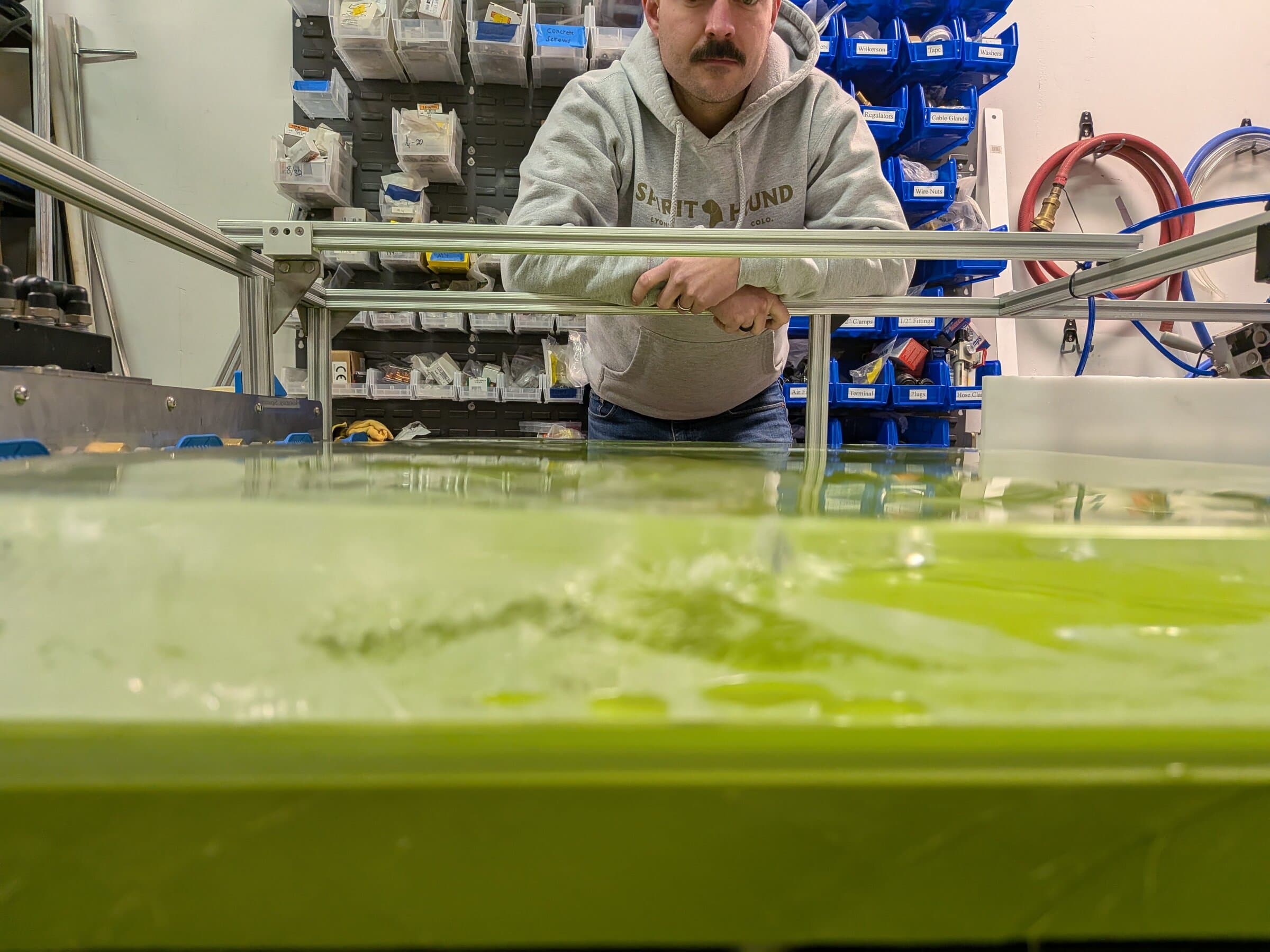
There was no commercially viable way to make crystal-clear ice at production scale. Early testing with off-the-shelf industrial refrigeration controls produced clear ice — but with internal stress fractures and large cracks. The insight that unlocked it: the critical variable wasn't low temperature, it was precise control over the rate of temperature change.
Our approach
Two structured R&D phases — feasibility first, then scale-up to a production-size cold plate. We developed a custom PLC-based refrigeration control system with custom expansion-valve control and a hot-gas bypass loop, replacing the off-the-shelf controllers that couldn't hold the ramp rate.
The result
27 documented test runs. Cycle time measured at 4.75 hours minimum, 5.2 typical. Full electrical load characterized at 203 A / 480V three-phase. Clear ice achieved consistently across every run once the custom controls were in. The R&D program then informed a $2M production system design carrying a written performance guarantee — which is the entire point of doing R&D first.
Related: Why process comes before equipment
Project at a Glance
- Pillar
- Innovate → Production
- Scope
- Two phased R&D programs
- Test runs
- 27 documented
- Cycle time
- 4.75 hr measured minimum
- Outcome
- Production system design with written performance guarantee
- Status
- In commissioning
Scale · Mid-market refrigerated foods manufacturer, two facilities
2. Finding the Real Constraint Before Spending Capital
The problem
The client needed to hit 280,000 lb/day for their next season and was ready to buy another filler to get there. Their internal capacity model assumed 95% OEE.
Our approach
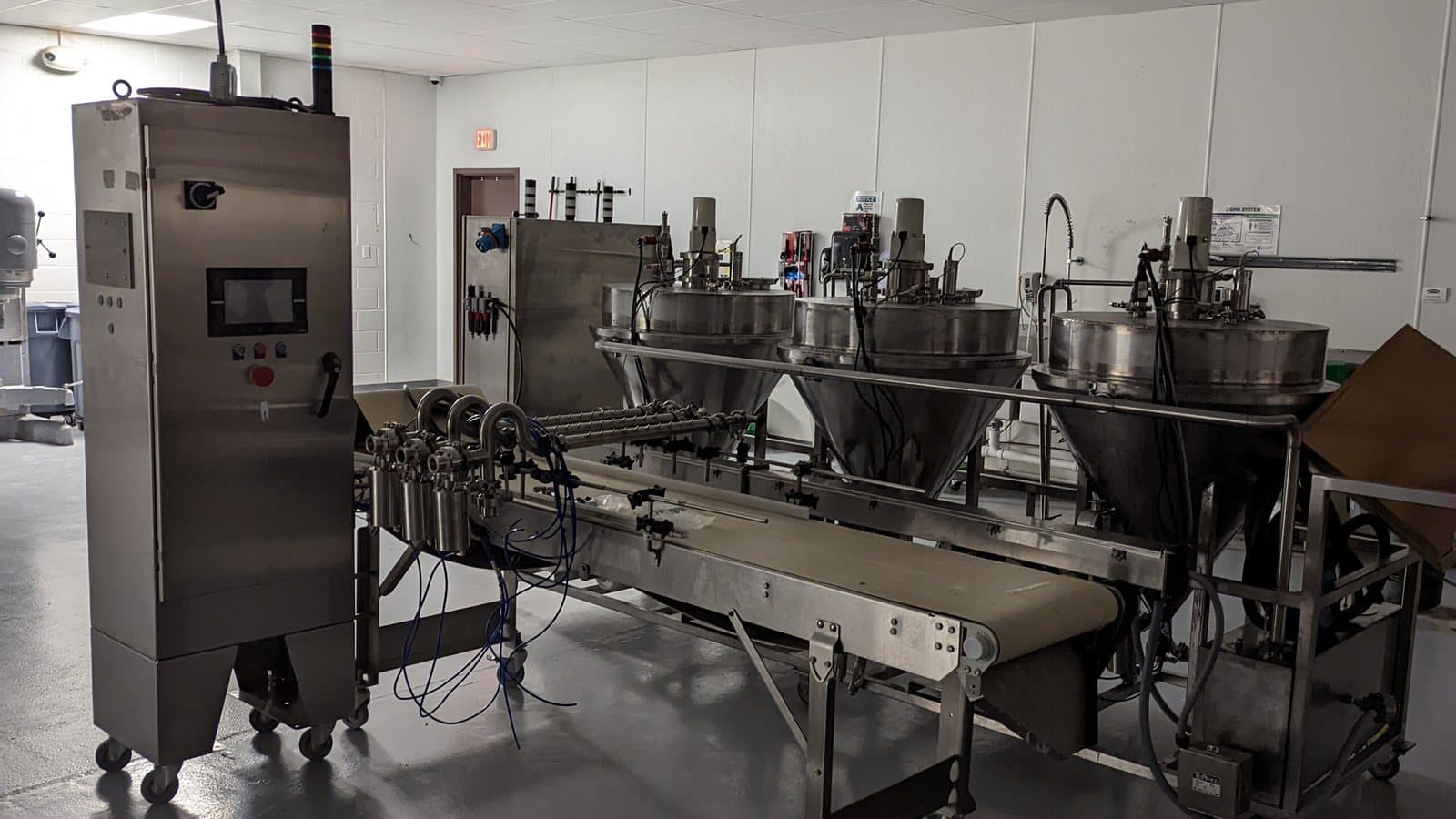
A station-by-station Theory of Constraints analysis across the entire line. The bottleneck wasn't the filler — it was the chill loop. Batch-mode chillers ran at 96 cups per minute while the six-lane filler rated at 120 cpm sat idle waiting on them. We decomposed true OEE: roughly 75% availability × 82% performance × 95% quality — about 58% actual, against the 95% assumed.
The result
A path that moves the bottleneck to 200 cpm and roughly 270,000 lb/day, with the sensitivity levers quantified: one added hour per day is worth 13,500 lb, each OEE point worth 3,600 lb. And the filler they were about to buy turned out to be sitting in their own facility already — not a buy decision, an integration decision. We also found a gas-rate reclassification worth $3,500–$10,700 a year with no capital at all.
Related: Why your capacity model says 95% and your line says 58%
Project at a Glance
- Pillar
- Scale
- Engagement
- $28,000 fixed price
- Duration
- 2–3 weeks
- Method
- Theory of Constraints, station by station
- Found
- True OEE ~58% vs. 95% assumed
- Avoided
- Buying a filler they already owned
Build · Equipment OEM needing production multiples of a proven design
3. Twenty Machines, One Repeatable Build
The problem
A proven machine design had to become twenty identical delivered units — with consistent quality and predictable per-unit cost, which is a fundamentally different engineering problem than building the first one.
Our approach
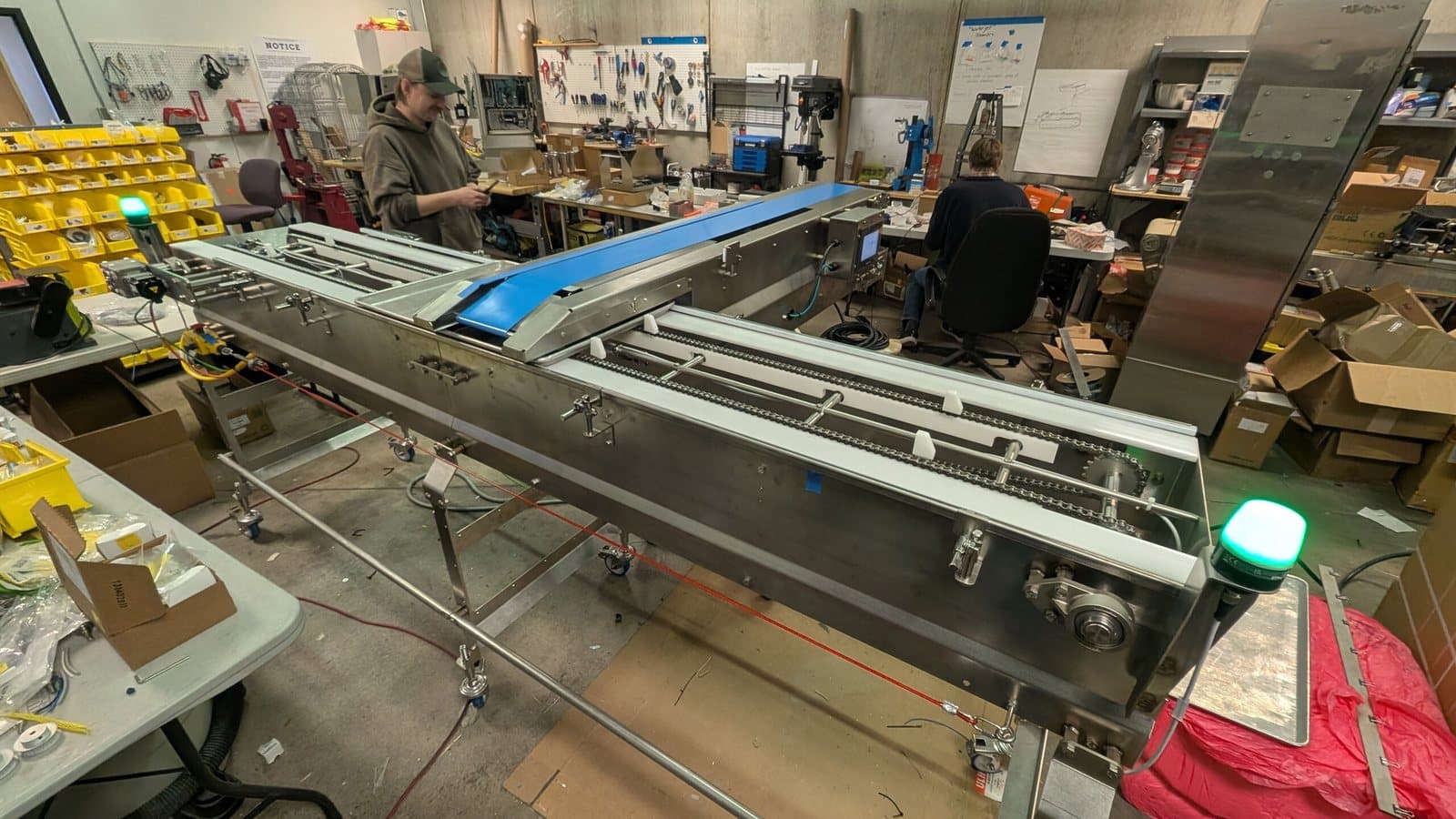
Production engineering, procurement, build scheduling, and QA across the full run in our Arvada shop. Fixturing and work instructions built for repeatability rather than one-off craftsmanship.
The result
20 machines delivered on a $300,000 contract, with per-unit repeatability holding at 22.7 labor hours and $8,956 in materials per unit. Across four production runs for this client, 52 machines delivered in total.
Related: How we build production multiples
Project at a Glance
- Pillar
- Production
- Contract
- $300,000
- Delivered
- 20 identical machines
- Per unit
- 22.7 labor hours
- Materials
- $8,956 per unit
- Program total
- 52 machines across 4 runs
Build · Hot sauce and condiment manufacturer — fourth engagement with this client
4. Sized to Your Data, Not Our Catalog
The problem
Caps were losing about five degrees of torque traveling through the dryer before the induction sealer, putting seal integrity at risk across 3,000 cases per twelve-hour shift. An operator was retorquing every jar by hand.
Our approach
We proved the clamp design on 100 of the client's own sample jars, on our shop test conveyor, before the 50% design review — because a cap retorquer that works on paper and slips on real glass is worthless. Then we sized the machine to their measured shift average rather than their nameplate ambition.
The result
A 35 jar-per-minute design basis against a 25 jpm shift average, with roughly 47 jpm machine capability — 34% headroom. Acceptance criteria written into the contract before work started: 30 minutes continuous at rate with the count logged from the PLC, and removal torque within ±10% across a 30-jar sample. We had quoted this client two machines previously and told them both were wrong — one too slow, one too big.
Project at a Glance
- Pillar
- Build
- Design basis
- 35 jars/min sustained
- Capability
- ~47 jpm — 34% headroom
- Torque window
- ±10% across a 30-jar sample
- Acceptance
- Written before design began
- Relationship
- 4th engagement
A note on what you don't see here
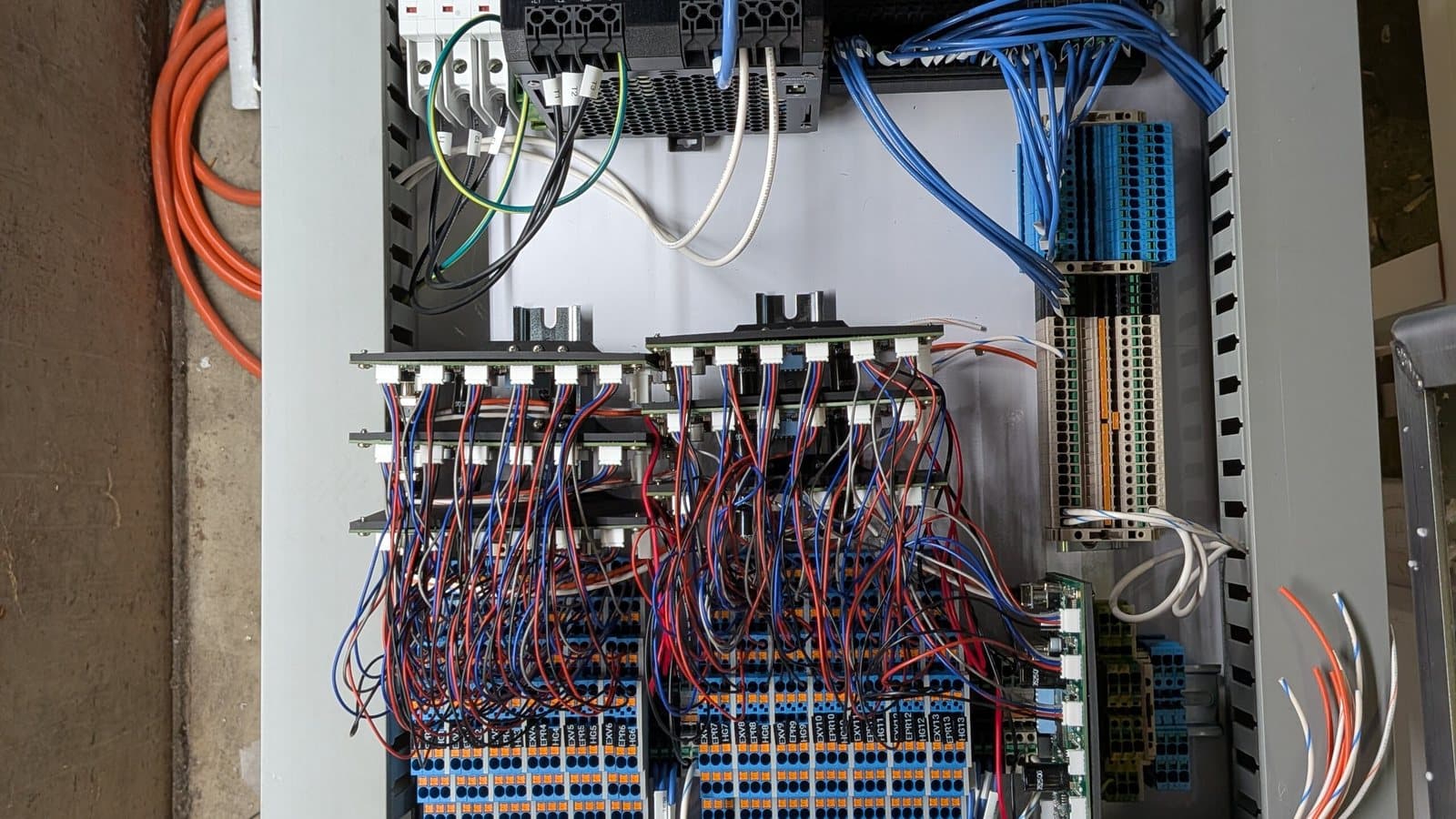
Most of our work is under NDA — proprietary processes, first-of-kind equipment, and products that aren't public yet. So we show our own engineering and our own shop rather than our clients' floors. If your process is worth protecting, that's part of why clients hire us.
Your Project Could Be Next
Tell us what you're up against. We'll tell you honestly whether we're the right fit — even when the honest answer is the smaller project.
Schedule a Discovery Call