
Manufacturing engineering · Food & beverage · Denver metro, Colorado
The Engineering Team You Wish You Had In-House
We help small manufacturers stand up their first real production line — and help established ones make the same volume for less. Full-stack engineering, from capital planning through commissioning, by a team that's been in your shoes.
Launch Partners at a Glance
- Longest client
- 8 years and counting
- Delivered
- 100+ projects
- Largest program
- 52 identical machines, 4 runs, one OEM
- Team
- 12 people + in-house shop
- Based
- Arvada, CO (Denver metro) — building nationwide
- Disciplines
- Mechanical, electrical, controls, automation
- Also
- Capital, capacity, and cost planning
An engineer responds within one business day.
“I needed Launch Partners two years ago. I just had no idea someone like you existed.”
Sound familiar?
1. Four Walls Every Manufacturer Hits
Whether you're making your first commercial batch or running a plant that's been going for a decade, the problem is almost always one of four. Most clients arrive describing one of these in their own words.
Can't Make It
The product doesn't exist on a production line yet. No proven process, no equipment, no path from recipe to revenue.
Can't Make Enough
Demand is outpacing your setup. Orders are coming in, retailers are calling, and the current line can't keep up.
Can't Make It Reliably
The equipment runs — until it doesn't. Unplanned downtime is eating your margins, and you're one bad week from missing a commitment.
Can't Make It Profitably
You hit the volume — the margin just isn't there. Labor per case, yield loss, scrap, changeovers, and overtime are eating what the line was supposed to earn.
Fit
2. Who We Work With — and Who We Don't, Yet
We're a good fit for a specific kind of manufacturer. Being clear about it saves everyone a call.
A strong fit
- You're a small manufacturer standing up a real production line for the first time. That's who we built this firm for.
- Or you're established, making enough, and need the cost per unit down and the margin up.
- You're funded, selling, or have capital allocated — the project has a budget and a decision-maker.
- You're pre-revenue but funded, with a product nobody has figured out how to make yet. We've done that work before.
- You want the right equipment, not necessarily custom equipment. We spec and integrate OEM machines when one exists, and build bespoke only when nothing does.
- The scope is $10K to $2M — planning, an assessment, a machine, a line, or a program.
- Food & beverage is our core; we also serve industrial and government manufacturers.
- You want a builder who commissions the result, not an advisor who hands you a deck.
Not yet — and what we'd suggest instead
- Pre-revenue, unfunded, with a product a co-manufacturer could already make. They'll get you to market faster and cheaper. How to think about it
- You need a single component or a catalog part. We can do that, but your first stop should be a distributor — faster and cheaper than routing it through us.
- Need the fix this week with no assessment. We take corrective calls for existing clients first; new relationships start with a conversation.
- Want a machine without agreeing on how it will be tested. We write acceptance criteria before design — it's how both sides stay honest.
How it works
3. Scoped Like Consulting. Delivered Like Manufacturing.
Step 1
Tell Us What You're Up Against
A straightforward conversation about your challenge — what's working, what isn't, and what you need production to look like. If we're not the right fit, we'll say so. No commitment, no sales pitch.
Step 2
Get a Real Plan
We assess your operation and scope a solution sized to your situation. You'll know exactly what we're solving, how, what it costs, and how it will be tested — before you commit to anything.
Step 3
Watch It Run
We engineer, build, run it at FAT in our shop, install, and commission at rate with your team. Then we stick around to make sure it works. Most clients come back for the next challenge — because the first one proved we could deliver.
What we offer
4. Engineering for Every Stage of Manufacturing
Whether you're making a product for the first time or taking cost out of a line that's run for years, we have the engineering depth to meet you where you are.
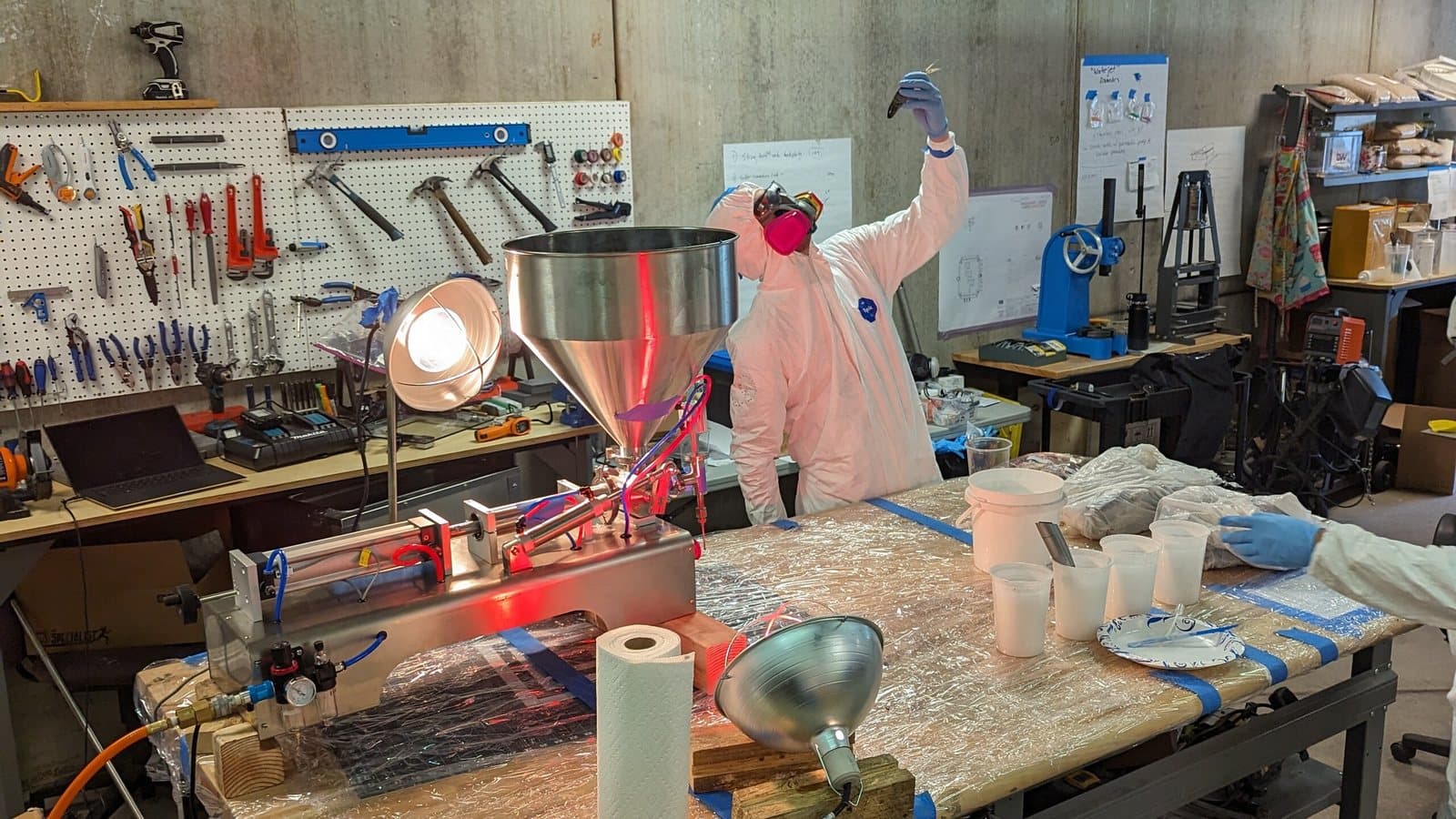
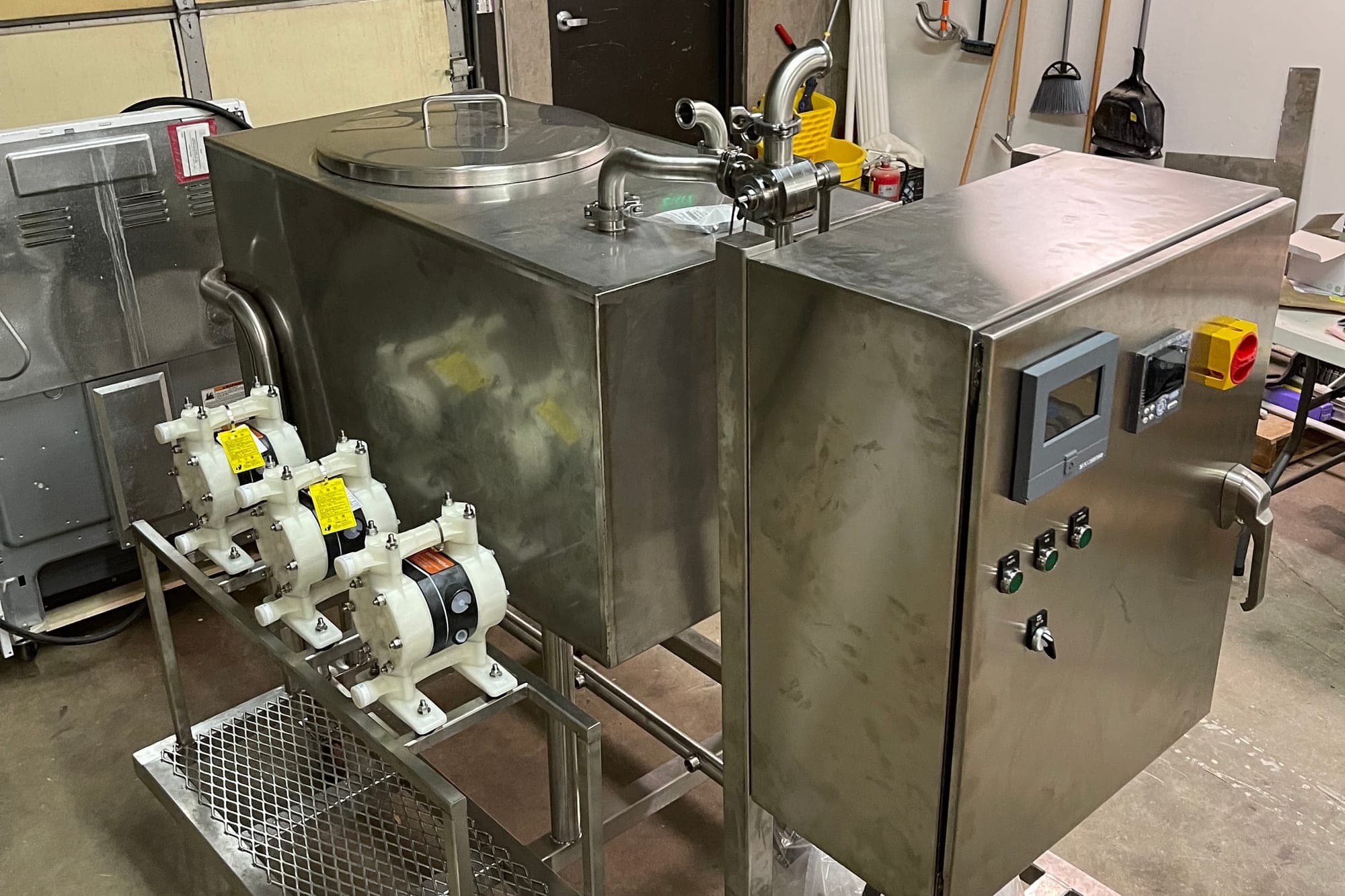
Your product doesn't fit standard equipment. We figure out how to make it — then we build the machine to prove it.
Read more →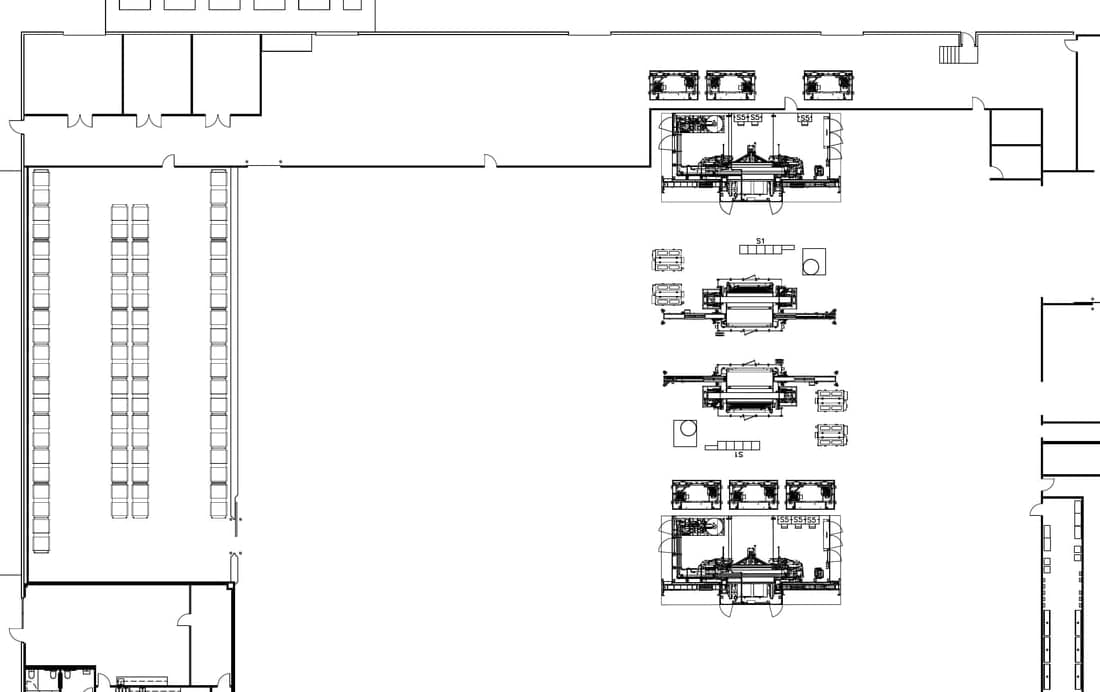
You can't make enough — or you can, but not profitably. Same method: find the real constraint, then design the system around it.
Read more →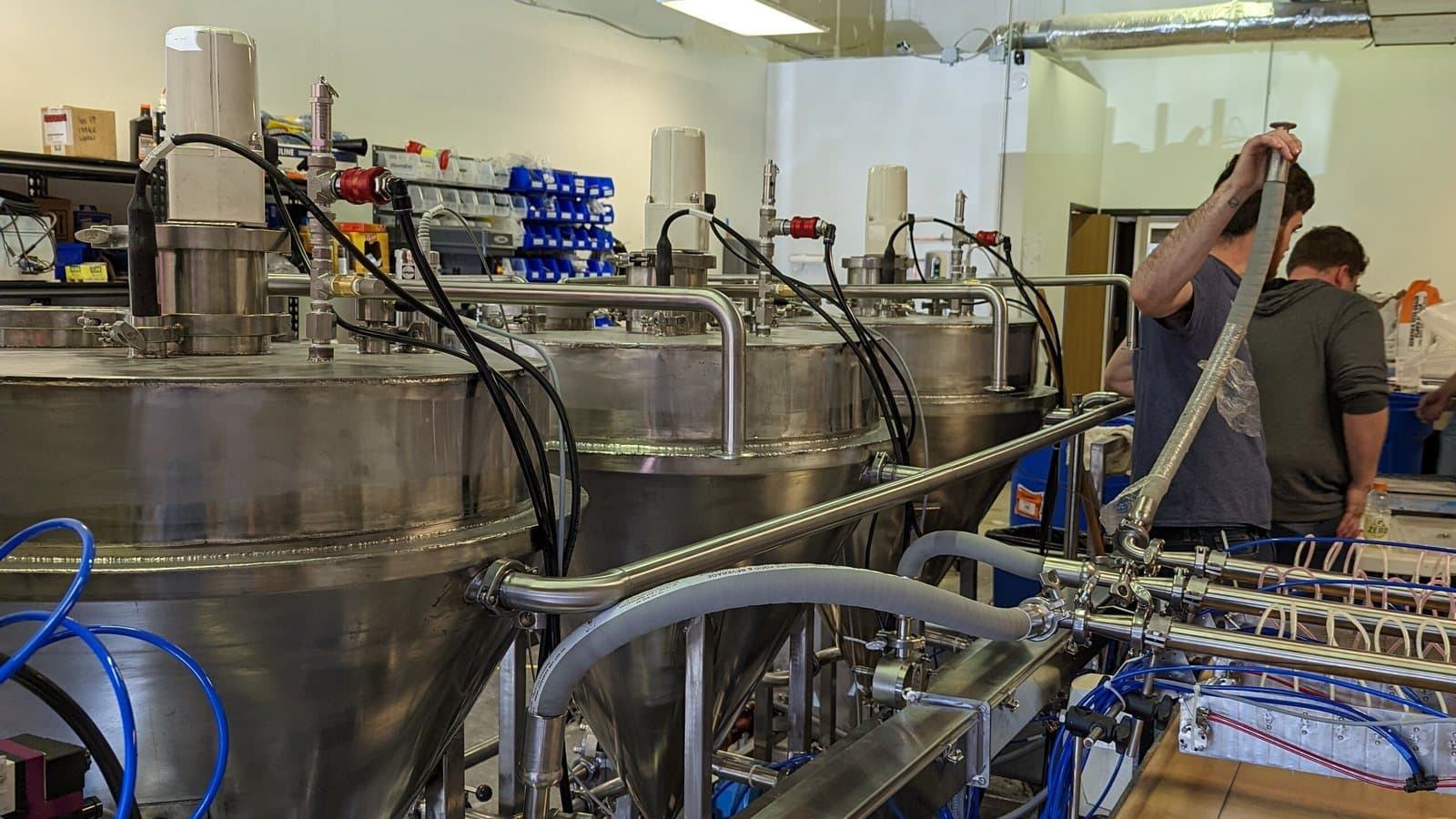
When no OEM machine can do the job, we design and build equipment purpose-made for your product.
Read more →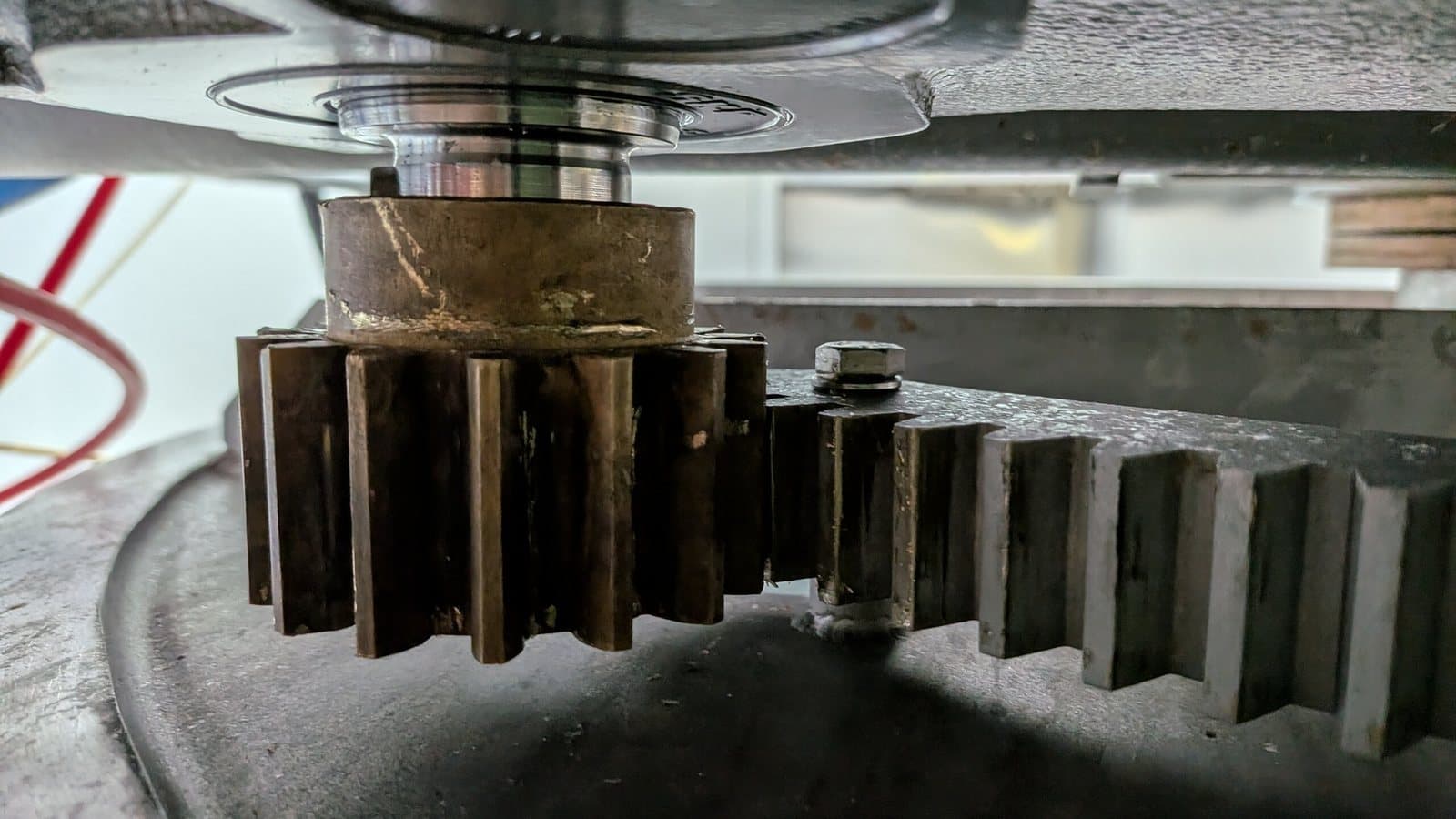
Preventive maintenance programs that keep your lines running — plus fast response when something breaks.
Read more →Why us
5. We're Not Consultants. We're Builders.
Most engineering firms advise. We plan, design, build, install, and commission. When we're done, your production line is running — not sitting in a report.
| What we claim | What that means in practice |
|---|---|
| Operators First | Every engineer on our team came from inside manufacturing operations. We've run the lines we now design — so we catch the problems that look fine on paper and fail on the floor. |
| Turnkey Engineering | Mechanical, electrical, controls, and automation under one roof. One team, one point of accountability. No subcontractors, no finger-pointing. |
| OEM First, Custom When Warranted | If a machine already exists that does the job, we spec it, source it, and integrate it. Custom is what we do when nothing off the shelf will work — it isn't our default answer. |
| Acceptance in Writing | Rates, tolerances, and test duration are agreed before design starts. You know how 'done' will be measured, and so do we. |
| Built to Scale | Every system we design accounts for your next phase of growth — so you're adding on later, not starting over. |
| Creativity Before Cost | We'll source and modify used equipment before defaulting to brand-new, and engineer the practical solution before the expensive one. We've managed budgets like yours. |
Proof
6. From Model to Machine
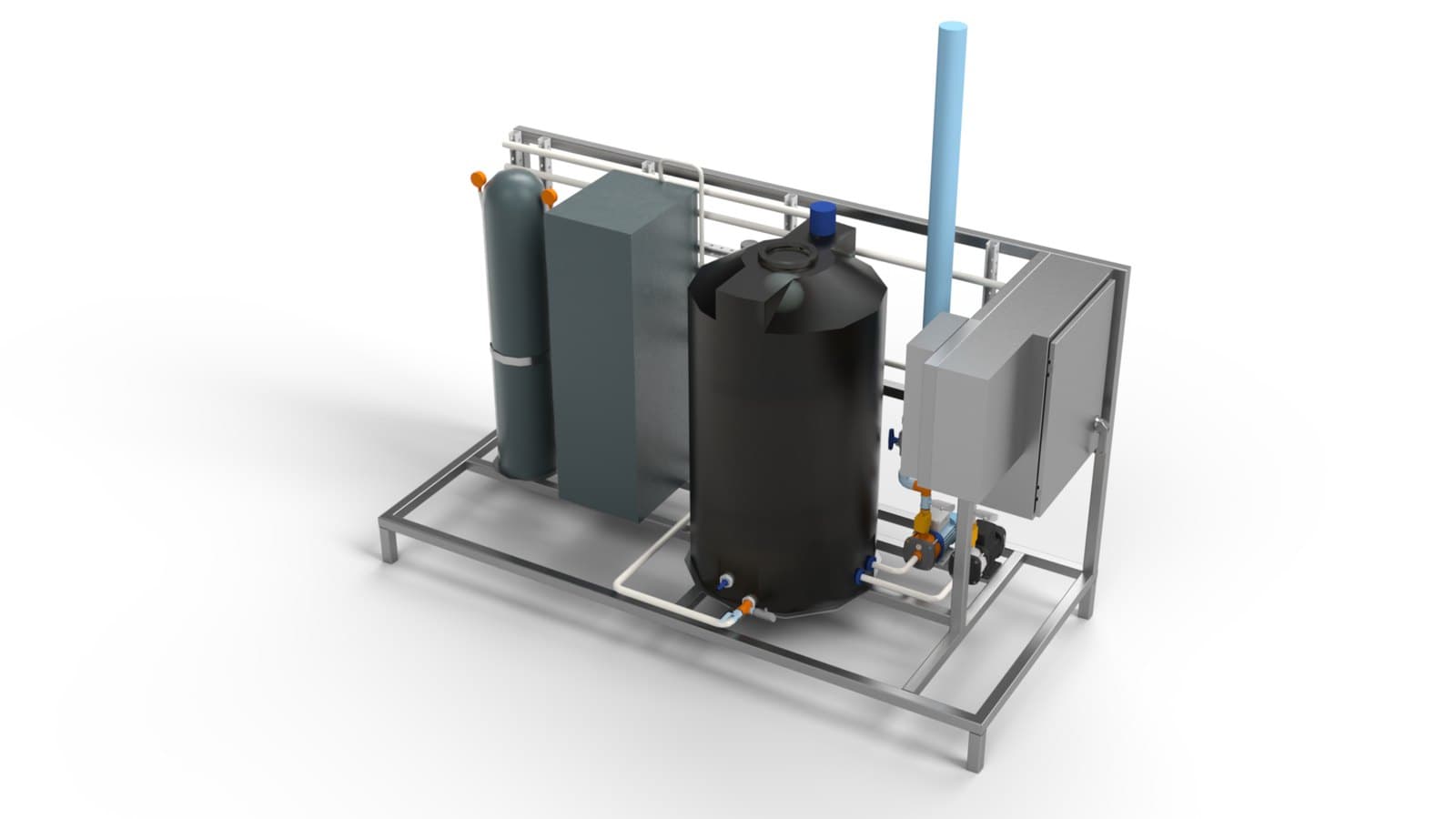
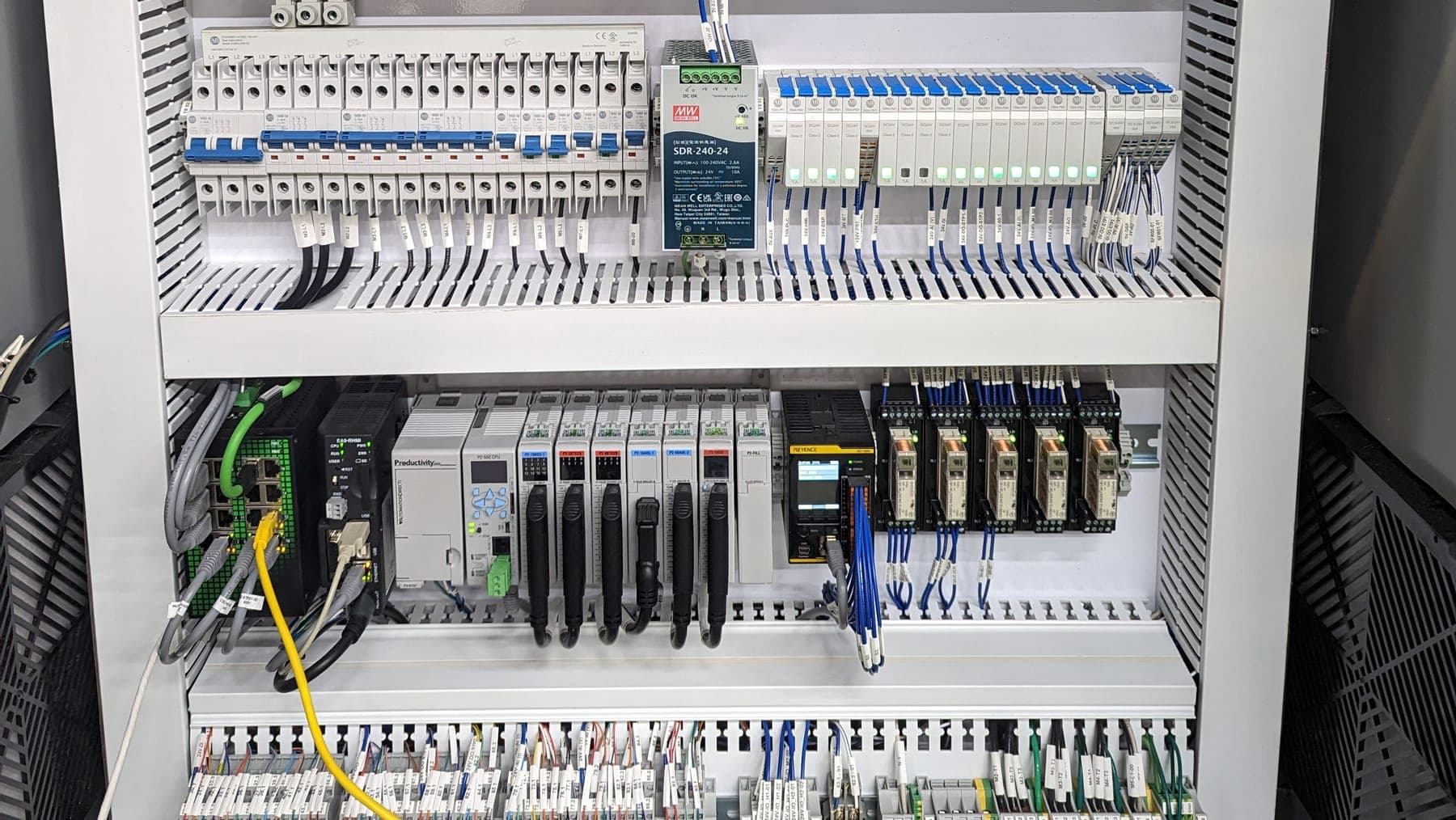
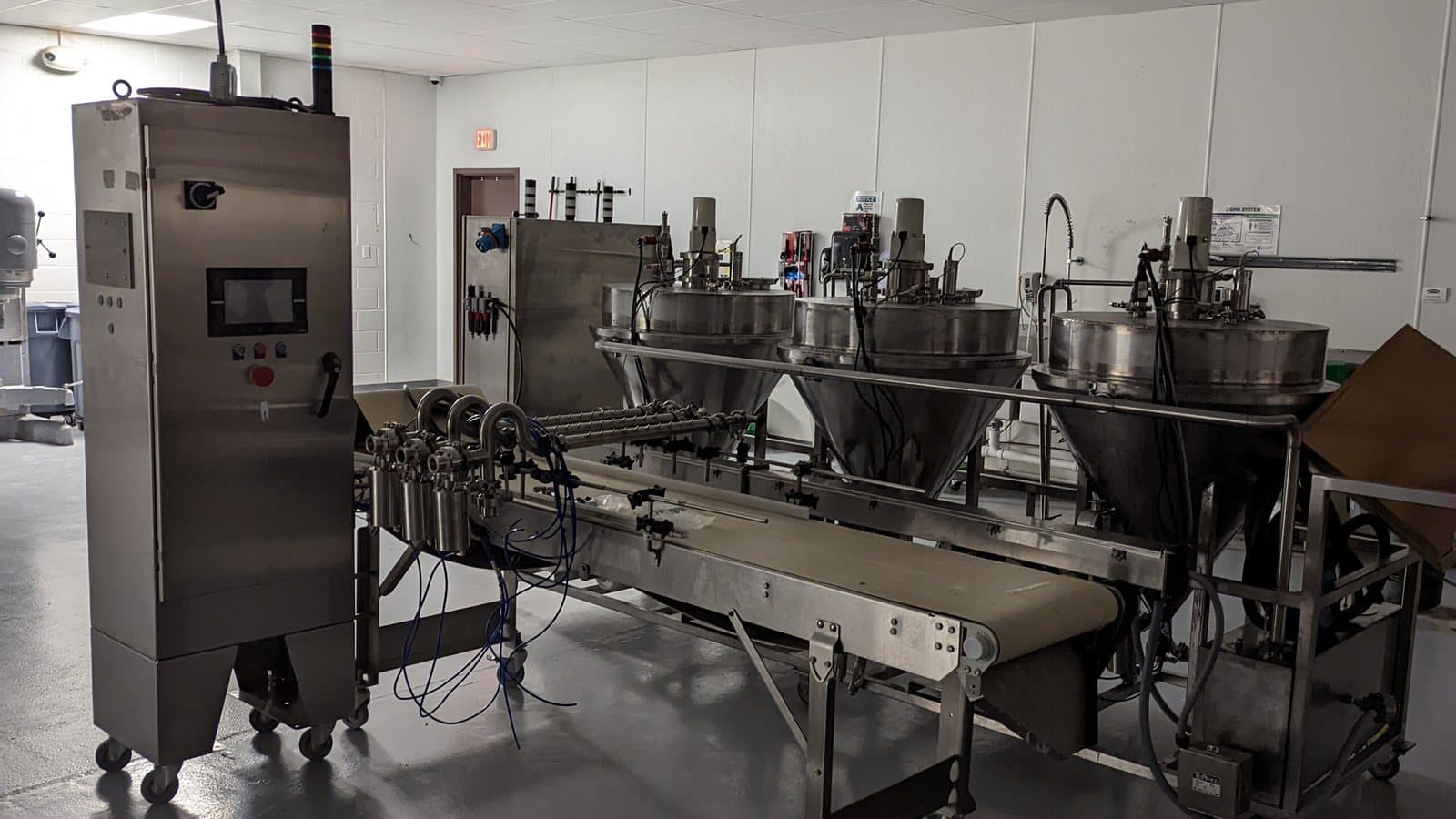
Every machine takes the same path: engineered in CAD, wired and labeled by the people who designed it, run at rate before it ships, then installed and commissioned on your floor. This is what that actually looks like.
What Lands on Your Floor
- Drawing package
- Mechanical, electrical, and P&ID as applicable
- Acceptance test
- Run at rate in our shop against criteria you agreed to — you're invited
- Certificate of Compliance
- Issued with every machine we ship
- Operator training
- On your equipment, with your crew, at commissioning
- Spares and support
- Known wear parts identified, and a number that gets answered
Capability
7. What We Actually Do In-House
Engineering and fabrication are the core of the firm. But a fair amount of our work never becomes a machine at all — capital plans, capacity models, and cost-per-unit analysis that tell you what to build, what to buy, what to defer, and what it will cost to run.
Engineering
- Mechanical design — SolidWorks, Onshape
- Electrical and controls design — AutoCAD Electrical
- PLC, HMI, and VFD programming and integration
- Process engineering, capacity modeling, and throughput analysis (Theory of Constraints)
- Refrigeration, utilities, and facility integration for production systems
In-House Build
- Fabrication and machine assembly in our own shop
- Control panel design and build — enclosure sizing, thermal analysis, wiring
- Prototype and pilot rigs for process development
- Factory acceptance testing before anything ships
- On-site installation, commissioning, and operator training
Planning & Advisory
- Capital planning — what to buy, what to defer, and what it costs to run
- Capacity planning and production modeling before you commit capital
- Cost-per-unit analysis — labor, yield, scrap, and utilities per case
- Equipment selection and OEM specification, including used and refurbished
- Phased roadmaps that sequence spend against the growth you actually expect
Documentation & Delivery
- Certificate of Compliance issued with every machine we ship
- Complete drawing package — mechanical, electrical, P&ID as applicable
- Written acceptance criteria agreed before design begins
- Daily client reporting on active installations
- Delivery experience under U.S. federal contract
Straight answers
8. Questions We Hear From Manufacturers
What makes your team different from other engineering firms?
Our engineers didn't start in consulting firms — we all worked inside real food plants first. We don't just give advice; we design and build the machines that make your products, then commission them on your floor.
We're a small company just getting started. Are we too small for you?
No — small manufacturers getting their first real line up are exactly who we built this firm for. If you're funded or already selling, you're our core client. And if a co-manufacturer is the smarter first move, we'll tell you that instead of selling you a line.
We're pre-revenue. Should we even call?
Yes, if you're funded and the hard part is that nobody knows how to make your product yet. That's process development, and it's some of our favorite work. If the product is straightforward and you just need it made, start with a co-manufacturer and come back when the volume justifies your own line.
We can make enough — the margin just isn't there. Can you help with that?
That's a large part of what we do. We measure where the cost actually goes — labor per case, yield loss, scrap, changeovers, overtime, utilities — then fix the constraint driving it. Sometimes that's automation, sometimes it's a tooling change, and sometimes it's a scheduling change that costs nothing.
Do you do planning work, or only build machines?
Both. We do capital planning, capacity modeling, cost-per-unit analysis, and phased equipment roadmaps — often well before anything gets built. Plenty of clients start with a planning engagement and decide with us whether a build is warranted at all.
Do you build custom equipment for everything?
No. We spec, source, and integrate OEM equipment whenever a machine already exists that does the job — that's usually faster and cheaper for you. We build custom when the product genuinely has no off-the-shelf answer.
What if my product is too hard to manufacture?
That's our favorite kind of project. We develop the process first, prove it on prototype hardware in our shop, then build the production machine around what we learned.
How much does it cost to work with you?
Projects typically run from about $10K planning and assessment engagements to $2M production systems. Every one starts the same way: a free call, then a scoped plan with real numbers before you commit to anything.
Do you only work on new plant designs?
No. We also improve existing plants — retooling current machines, adding automation, taking cost out of lines that already run, and building maintenance programs that keep them running day after day.
Do you work outside Colorado?
Yes. We're based in Arvada, in the Denver metro, and build nationwide — recent work spans Texas, Nebraska, Florida, California, and Illinois, plus a federal production contract shipped from our shop.
More in Insights — how we think about retooling vs. new lines, OEE, acceptance testing, and scaling a novel product.
Got a Production Problem? Let's Fix It.
Tell us what's holding your plant back — a product you can't make yet, or a cost per case that won't come down. We'll listen, ask the right questions, and tell you honestly whether we're the right fit. No pitch, no pressure.
Schedule Your Discovery Call